
How Many Devices Can Zigbee 3.0 Handle
author
How many devices can Zigbee 3.0 handle in real smart energy projects? This question goes far beyond a simple spec sheet. For renewable energy teams, facility operators, and buyers comparing thread vs zigbee mesh range, smart home peak load shifting, and zigbee 3.0 device limit capacity, real performance depends on interference, routing, power design, and protocol integration. This guide explains what actually determines scalable, stable Zigbee networks.
In renewable energy environments, Zigbee 3.0 is often used for distributed sensing, relay control, occupancy-based HVAC response, battery room monitoring, inverter-adjacent telemetry, and demand-side load coordination. The practical device limit is not only about what the protocol theoretically supports, but about how many end devices, routers, and control points can remain responsive during peak traffic, noisy RF conditions, and power events.
For information researchers, operators, procurement teams, and enterprise decision-makers, the better question is not “what is the maximum number on paper?” but “what node count can be sustained with predictable latency, acceptable battery life, and manageable maintenance cost?” That is the standard NHI applies when evaluating connectivity choices for energy and climate control projects.
What Zigbee 3.0 Can Handle in Renewable Energy Deployments
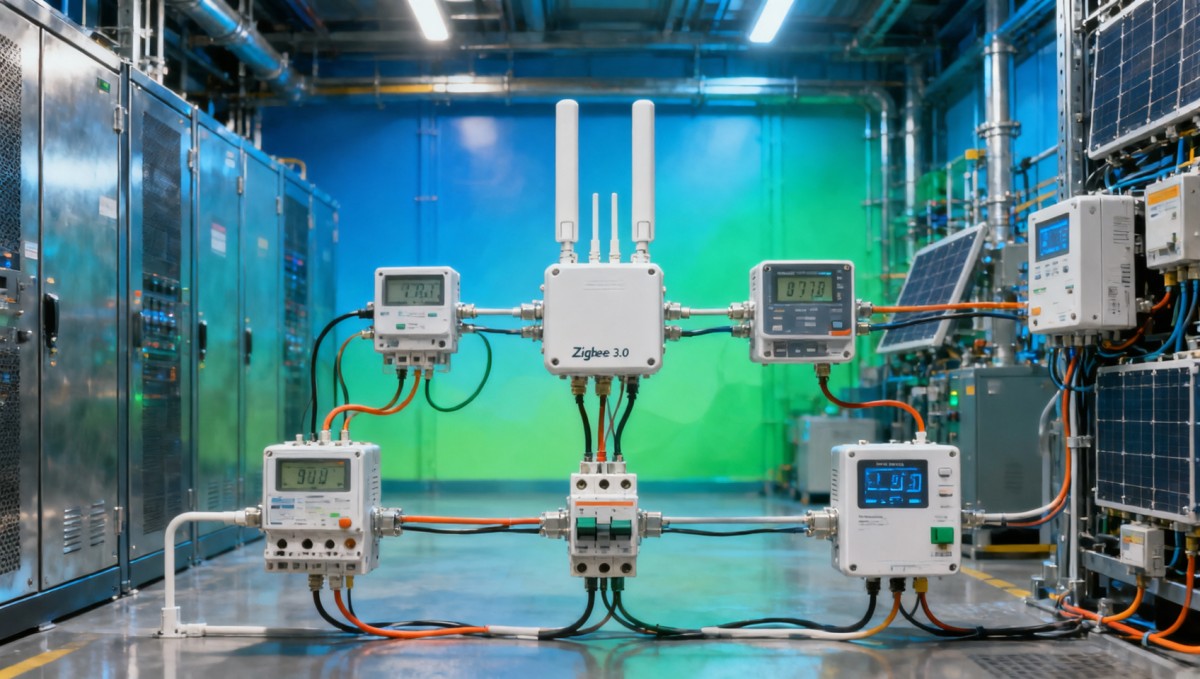
Zigbee 3.0 can theoretically support large mesh networks, and many technical discussions cite limits in the hundreds or even thousands of nodes depending on topology. In practice, renewable energy projects rarely succeed by pushing the absolute ceiling. A better planning range for commercial energy sites is often 50 to 200 active devices per coordinated network segment, especially when traffic includes metering updates, relay actions, alarms, and periodic status polling.
The key distinction is between end devices and routers. Battery-powered sensors for temperature, current state, occupancy, or window position may sleep and communicate in short intervals. Routers and coordinators, by contrast, carry forwarding load. A network with 120 mostly sleeping end devices may perform well, while a network with 80 frequently chatting routers can become unstable if route tables, channel planning, and power supply quality are not engineered correctly.
In solar-plus-storage buildings, Zigbee 3.0 is attractive because it supports low-power sensing and mesh coverage across electrical rooms, control cabinets, and tenant spaces. However, energy projects introduce extra complexity: metal enclosures, switchgear, inverters, dense Wi-Fi, and harmonic noise can all reduce effective network capacity. That means the real answer to zigbee 3.0 device limit capacity always depends on RF environment and message frequency, not protocol branding alone.
NHI’s benchmark perspective is simple: if a network must support load shedding, HVAC response, and meter-driven automation within 300 milliseconds to 2 seconds depending on use case, capacity planning should be conservative. A lighting sensor delayed by 1 second may be acceptable. A battery dispatch relay delayed by 3 to 5 seconds during a peak event may not be.
Typical node expectations by project type
The table below shows realistic planning ranges for Zigbee 3.0 in energy-related scenarios rather than headline claims. These are not universal limits, but practical deployment bands used to reduce congestion, simplify maintenance, and preserve routing margin.
The operational takeaway is clear: as traffic criticality rises, the advisable device count per mesh segment often falls. Stable segmentation usually delivers better renewable energy performance than one oversized network with weak routing discipline.
Why spec-sheet limits mislead buyers
- They often assume clean RF conditions, short routing paths, and low broadcast traffic.
- They may not reflect metal-heavy plant rooms, inverter zones, or high-density apartment energy systems.
- They rarely account for mixed workloads such as telemetry every 30 seconds plus urgent control commands.
- They do not show how battery-powered end devices behave after 12 to 24 months in a congested mesh.
The Four Factors That Actually Define Zigbee Capacity
When evaluating thread vs zigbee mesh range for renewable energy applications, capacity must be treated as a system variable. Four factors usually determine whether a Zigbee 3.0 network remains healthy at 80 nodes, 150 nodes, or beyond: topology, interference, message design, and power architecture. Ignoring any one of these can collapse usable capacity by 30% to 50%.
Topology matters because Zigbee is a mesh, not a simple point-to-point link set. If too many nodes rely on a small number of routers, forwarding load accumulates. In practical building energy projects, keeping average hop count around 2 to 4 is usually healthier than allowing deep, irregular routes across 5 or more hops. Every extra hop adds delay risk and increases retransmission probability under noise.
Interference matters because Zigbee shares the crowded 2.4 GHz band in many deployments. In renewable energy buildings, Wi-Fi access points, Bluetooth maintenance tools, and metal electrical infrastructure can degrade signal quality. A site that appears fine with 40 devices may become unreliable at 90 devices if channel overlap and cabinet shielding are not addressed during design.
Message design is the hidden bottleneck. A device reporting every 5 seconds instead of every 60 seconds increases channel occupancy by 12 times. Multiply that across 70 sensors, and a network that once looked oversized suddenly behaves overloaded. For peak load shifting, event-driven reporting is often smarter than high-frequency polling, especially for non-critical environmental variables.
Power architecture is equally important. Router nodes should have clean, stable power. In mixed energy installations, poorly regulated USB adapters or noisy auxiliary power lines can create router resets that disrupt the whole mesh. In other words, the answer to how many devices Zigbee 3.0 can handle is partly an electrical engineering question, not just a wireless one.
Capacity impact by engineering variable
The following matrix helps procurement and design teams connect technical choices with real capacity outcomes. It is particularly useful during early-stage BOM and architecture review for smart energy projects.
For operators and buyers, this table shows why capacity claims must be evaluated as a deployment package. A strong coordinator cannot compensate for weak routing density or poorly chosen reporting intervals.
A practical engineering checklist
- Map metal barriers, inverter cabinets, battery rooms, and telecom closets before final node count is approved.
- Separate critical control traffic from low-value monitoring traffic where possible.
- Choose at least 1 router for every 8 to 15 end devices in larger building zones, then validate with field tests.
- Stress-test the network during simultaneous switching events, not only under idle conditions.
Zigbee 3.0 in Smart Home Peak Load Shifting and Distributed Energy Control
In renewable energy projects, Zigbee 3.0 often becomes valuable not because it supports the biggest possible network, but because it supports the right mix of low-power sensing and distributed control. Smart home peak load shifting is a strong example. A household or multi-dwelling building may use Zigbee sensors, smart plugs, relays, thermostatic valves, and occupancy nodes to reduce demand during high-tariff periods or utility response windows lasting 15 to 60 minutes.
The challenge is that peak load shifting creates burst traffic. At the start of an event, multiple relays may switch, thermostats may update setpoints, and energy meters may push fresh data. A network that feels stable during normal operation can slow down during these burst windows. This is why buyers comparing thread vs zigbee mesh range should also compare burst-handling behavior, not just idle coverage.
For a residence with rooftop solar, battery storage, and 25 to 40 controllable loads, Zigbee can be very efficient if loads are grouped and staged. Instead of sending 30 independent commands at once, the system may sequence control in 3 to 5 waves separated by a few hundred milliseconds. That lowers collision risk and makes observed response more predictable.
In small commercial microgrids, Zigbee can also support HVAC participation in load shaping. Room-level occupancy sensors, thermostatic controls, and submeter-linked relays may reduce non-critical demand by 5% to 20% during peak pricing periods. The network succeeds when automation logic respects communication capacity instead of assuming every node can be polled continuously.
Where Zigbee performs well in energy control
- Distributed room sensors that report every 1 to 5 minutes rather than every few seconds.
- Relay control for staged, non-simultaneous demand response actions.
- Battery-friendly environmental monitoring in retrofit buildings where new cabling is costly.
- Tenant-zone HVAC coordination where the required response window is measured in seconds, not milliseconds.
Where extra caution is needed
Zigbee may be less suitable as the sole control layer for extremely dense, highly time-sensitive industrial energy operations, especially where many actuators must respond within sub-second windows under strong interference. In such cases, segmentation, gateway layering, or hybrid architecture may be required. A common mistake is treating all energy control tasks as equal when in fact they span different latency classes.
Another mistake is placing coordinators inside electrical cabinets with poor RF escape paths. A coordinator installed near switchgear or behind metal doors may reduce effective thread vs zigbee mesh range comparisons to meaningless numbers, because the network fails before range becomes the real issue.
For operators, the lesson is practical: define which automations can tolerate 1 to 2 seconds, which need less than 500 milliseconds, and which require guaranteed wired fallback. Only then should the Zigbee 3.0 device limit be considered in a business context.
How to Size, Segment, and Procure a Stable Zigbee Network
Procurement decisions often fail because teams buy devices first and architecture second. In renewable energy deployments, the order should be reversed. Start by defining zones, command criticality, expected reporting intervals, and maintenance access. From there, decide whether one mesh is sufficient or whether the site should be divided into 2, 3, or more logical segments connected by gateways or supervisory controllers.
As a practical rule, a single well-designed mesh may cover a small energy-aware home or a compact commercial floor. Once a project expands across multiple electrical rooms, rooftop structures, basement plant spaces, and tenant areas, segmentation becomes more than a convenience. It becomes risk control. A segmented design limits blast radius when interference, power resets, or routing anomalies appear in one zone.
Buyers should also ask how vendors define “supported devices.” Does the number include sleeping end devices only, or mixed routers and active actuators? Does it reflect 24-hour soak tests, or only lab pairing? Can the network retain acceptable latency after 10% of nodes reboot or after 1 channel becomes noisy? These questions are more useful than marketing phrases about seamless ecosystems.
NHI’s procurement lens prioritizes engineering evidence: route stability, packet success under interference, standby power draw, battery drain curve, and recoverability after partial outages. In renewable energy systems, resilience during stress matters as much as normal-state capacity.
Procurement decision table for renewable energy projects
The following table can support buyers comparing Zigbee hardware stacks for smart home peak load shifting, climate control, or distributed monitoring.
This kind of decision framework helps business evaluators move from generic compatibility claims to measurable procurement criteria. In energy projects, every unsupported assumption can turn into future truck rolls, battery replacements, or control instability.
Implementation steps that reduce scaling risk
- Run a site RF survey before final hardware selection.
- Build a pilot with at least 20% of expected final traffic load.
- Test simultaneous control events during occupied and unoccupied hours.
- Document acceptable latency thresholds for each automation class.
- Scale by zone, validating each segment for 7 to 14 days before expansion.
FAQ for Buyers, Operators, and Energy System Decision-Makers
The most common questions about Zigbee 3.0 in renewable energy are rarely about theory alone. They usually reflect rollout risk, maintenance burden, and integration strategy. The answers below address the most practical concerns from operators and procurement teams.
Is Zigbee 3.0 enough for a building with more than 100 devices?
Yes, often it is, but not always as one flat network. A building with 100 to 200 devices can work well if traffic is moderate, router placement is deliberate, and the site is segmented where needed. If devices report too frequently or many commands are issued simultaneously, the practical limit may drop. For mixed energy management, 2 smaller meshes are often more reliable than 1 oversized mesh.
How does Zigbee compare with Thread for mesh range?
Thread vs zigbee mesh range is not a one-number comparison. Both depend on radio design, placement, and interference. In renewable energy facilities, the larger issue is often route resilience near metal and electrical noise rather than nominal open-air range. Buyers should compare latency under load, recovery after resets, and gateway strategy with BMS or EMS platforms.
What is the most common scaling mistake in smart home peak load shifting?
The most common mistake is excessive polling. Teams collect far more data than the control logic truly needs. If occupancy, room temperature, and plug load data are pushed every 5 to 10 seconds, battery life falls and network traffic rises sharply. For many demand response workflows, 30 to 300 second intervals plus event-based alerts are enough.
What should enterprise buyers request from suppliers?
Ask for stress-test conditions, not just headline capacity. Request documented node counts, latency under interference, battery assumptions, outage recovery behavior, and integration details for energy management platforms. If a supplier cannot explain how their system behaves during a burst event or partial power failure, the quoted device limit has limited decision value.
Zigbee 3.0 can support substantial device counts in renewable energy projects, but real capacity is determined by mesh architecture, reporting strategy, interference control, and power integrity. For smart home peak load shifting, commercial HVAC coordination, and distributed sensing, the strongest designs are usually segmented, tested under stress, and aligned with actual control priorities rather than protocol marketing.
NexusHome Intelligence approaches this topic through measurable engineering reality: scalable routing, verified latency, energy-aware hardware behavior, and transparent procurement criteria. If you are planning a renewable energy deployment and need help evaluating Zigbee 3.0 capacity, integration pathways, or supplier claims, contact us to discuss your application, request a tailored assessment, or explore a data-driven solution roadmap.
Protocol_Architect
Dr. Thorne is a leading architect in IoT mesh protocols with 15+ years at NexusHome Intelligence. His research specializes in high-availability systems and sub-GHz propagation modeling.
Related Recommendations
- Dr. Aris ThorneWhat Affects Zigbee TRV Battery Life Most
- Dr. Aris ThorneHow to Source Zigbee Radiator Valve TRVs
- Dr. Aris ThorneThread vs Zigbee Mesh Range: Which Wins
- Dr. Aris ThorneHow Many Devices Can Zigbee 3.0 Handle
- Dr. Aris ThorneSmart Home Supplier Directory: Are You Filtering by Test-Verified Latency or Just Marketing Claims?
- Dr. Aris ThorneSmart Home Hardware Testing: Why Lab Benchmarks Don’t Predict Real-World Zigbee Mesh Stability
- Dr. Aris ThorneIoT Engineering Truth: When a ‘Zigbee 3.0 Compliant’ Label Hides Legacy Stack Dependencies
- Dr. Aris ThorneSubmit IoT benchmark data: What gets rejected—and why—during peer review?
- Dr. Aris ThorneIoT engineering truth: When spec sheets conflict with real-world Zigbee mesh performance
- Dr. Aris ThorneZigbee smart plug test: Do real-world mesh hops increase latency more than vendor claims suggest?
Analyst