
How to Check Matter Standard Compatibility Before You Buy
author
Before investing in connected energy devices, verify Matter standard compatibility with real protocol data—not packaging claims. For buyers, operators, and enterprise decision-makers navigating the IoT supply chain, NHI delivers IoT hardware benchmarking, smart home hardware testing, and Matter protocol data that expose latency, interoperability, and compliance risks. Use this guide to make smarter sourcing decisions with engineering-backed insight.
In renewable energy environments, Matter compatibility is no longer a convenience feature. It affects whether a battery controller can report status to a building management system, whether a heat pump can coordinate with occupancy sensors, and whether smart relays can respond to peak-load commands without delay. A label that says “Matter supported” does not tell you which device type is implemented, which transport layer is used, or how stable the product remains under real electrical and wireless interference.
For research teams, facility operators, procurement managers, and corporate decision-makers, the cost of a wrong hardware choice can appear months after deployment. The result may include 200–500 ms command delay, incomplete commissioning, firmware lock-in, or energy data drift that compromises demand response strategies. That is why compatibility must be checked through engineering evidence, not only through sales claims.
Why Matter Compatibility Matters in Renewable Energy Systems
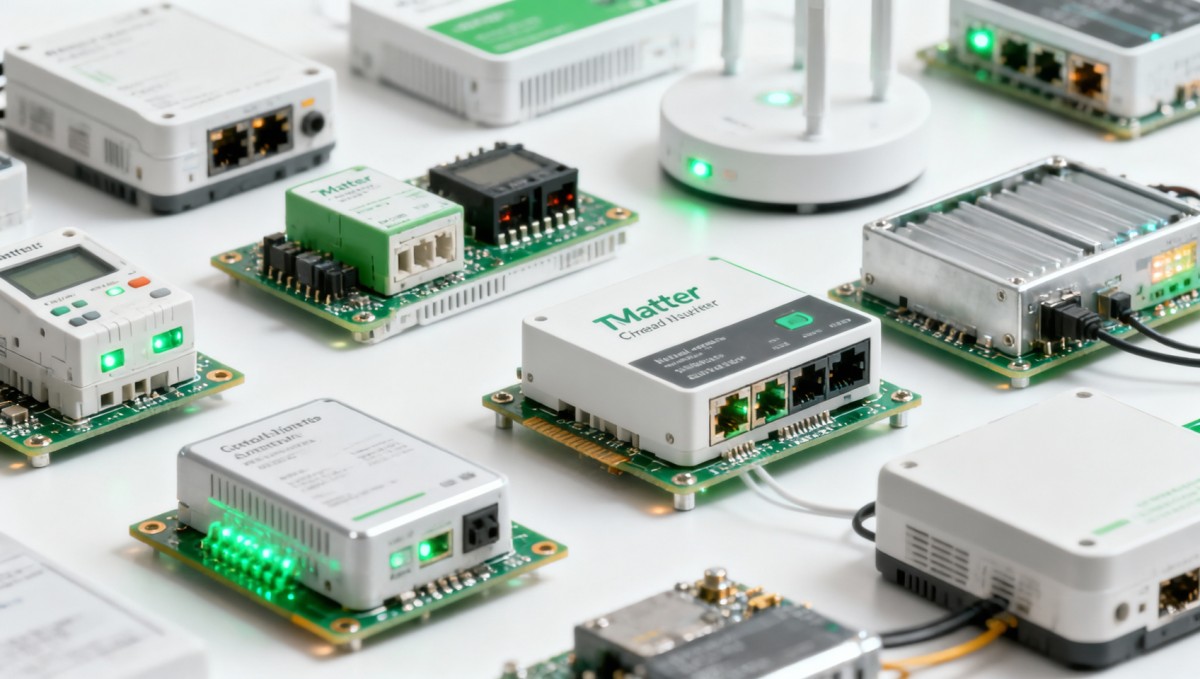
Matter was designed to improve interoperability across smart home and smart building ecosystems, but renewable energy deployments add a stricter set of requirements. Devices such as smart thermostats, EV chargers, solar-aware load controllers, battery gateways, and energy monitoring plugs operate inside time-sensitive workflows. If a device joins a Matter network but fails to exchange stable telemetry every 5–15 seconds, it may still pass a marketing test while failing an operational one.
This becomes especially important in mixed-protocol environments. A modern property may use Thread for low-power sensors, Wi-Fi for inverters or gateways, BLE for onboarding, and legacy Zigbee components still active in lighting or submetering. In such cases, buyers must verify whether Matter is native, bridged, or partially implemented. A bridged product can work well, but it introduces additional failure points such as higher latency, dependency on a hub, and firmware mismatch between the bridge and end node.
In renewable energy applications, compatibility also influences carbon-saving performance. If HVAC, smart blinds, occupancy detection, and energy storage cannot exchange data reliably, automated load shifting loses accuracy. Even a 2%–5% deviation in sensor reporting or switching schedule can reduce the value of peak shaving in commercial buildings. For enterprises managing hundreds of nodes, these small technical gaps become measurable operational costs.
NHI approaches Matter validation as a benchmarking problem, not a branding exercise. Instead of accepting the phrase “works with Matter,” the focus should be on protocol conformance, transport path, commissioning success rate, and behavior under stress. That is the difference between consumer-grade compatibility and procurement-grade verification.
Where compatibility failures usually appear
- Commissioning instability when 20–50 devices are added during the same deployment window.
- Multi-admin limitations that prevent coordination between utility apps, facility apps, and local dashboards.
- Energy telemetry gaps where power, voltage, or relay status refreshes too slowly for demand response logic.
- Thread border router dependency that creates blind spots after router reset or firmware rollback.
What to Check Before You Buy a Matter-Certified Energy Device
The first step is to identify the exact renewable energy use case. A Matter-compatible smart plug used for household convenience has different requirements from a relay controlling water heating, a thermostat integrated with solar self-consumption logic, or a load controller participating in time-of-use optimization. Compatibility should be checked against the intended function, the network topology, and the expected reporting interval.
Buyers should request four categories of evidence from suppliers: supported Matter device type, transport method, firmware update policy, and integration test records. Ask whether the product runs Matter over Thread or Matter over Wi-Fi, whether onboarding uses BLE, and whether the device can maintain stable operation after 30–90 days without manual re-pairing. These details matter more than a logo printed on packaging.
You should also check energy-specific attributes. For example, if the device is intended for load control, what is the relay switching endurance? If it supports monitoring, what is the typical metering accuracy range under low-load and high-load conditions? If it will operate inside plant rooms or outdoor enclosures, what happens to wireless stability at 0°C–40°C, or under heavy RF congestion from gateways, cameras, and industrial Wi-Fi?
The table below summarizes a practical pre-purchase checklist for Matter standard compatibility in connected energy deployments.
The strongest signal of true compatibility is not broad marketing language but complete technical disclosure. If a supplier cannot explain transport architecture, supported clusters, update procedure, and test conditions, the risk profile is too high for enterprise or multi-site renewable energy projects.
A 6-point procurement screen
- Confirm the exact deployment scenario: home energy, commercial HVAC, solar self-consumption, EV charging, or battery-backed load control.
- Request protocol data for onboarding success rate across at least 10 repeated commissioning attempts.
- Check whether the device remains functional if internet access is interrupted for 1–24 hours.
- Verify API or dashboard visibility for operators, not only end-user mobile apps.
- Review firmware support horizon, ideally 24 months or longer for business-critical devices.
- Test with the actual ecosystem controller planned for deployment, not with a generic demo hub.
How to Verify Real-World Performance Instead of Trusting the Box
A Matter logo proves very little about field performance. In renewable energy systems, the real question is how the device behaves when several variables change at once: unstable Wi-Fi, dense RF traffic, HVAC startup current, battery inverter switching noise, and multiple automation rules running in parallel. A proper check should include lab validation and site-like simulation.
NHI’s benchmarking approach is useful because it translates compatibility into measurable behavior. For example, command latency can be tested across single-node and multi-node paths, packet loss can be observed under congestion, and battery-backed sensors can be evaluated for discharge stability when reporting intervals shrink from 60 seconds to 10 seconds. That type of data is more actionable than generic statements such as “low power” or “seamless integration.”
Operators should also separate basic connectivity from operational resilience. A device may pair successfully on day 1 and still underperform after 3 weeks due to memory leaks, poor retry logic, or weak border router recovery. If the product is used in energy automation, these issues affect scheduling accuracy, demand response participation, and user confidence in the whole renewable energy stack.
The comparison below outlines what meaningful verification looks like for buyers evaluating Matter standard compatibility before purchase.
For procurement teams, the practical lesson is simple: ask for evidence generated under realistic conditions. If a vendor only provides app screenshots or one-time demo videos, that is not enough to validate Matter compatibility for renewable energy operations.
Field risks that often stay hidden until after deployment
Bridged devices mistaken for native Matter nodes
This can be acceptable, but you must budget for hub maintenance, firmware synchronization, and an additional point of failure. In a 50-device installation, one unstable bridge can affect the perceived quality of the entire energy automation system.
Energy measurements assumed to be utility-grade
Matter connectivity does not guarantee metering precision. For optimization workflows, a practical target is to understand whether the device is suitable for trend monitoring, device control, or billing-adjacent analysis. Those are three very different use cases.
Selection Criteria for Buyers, Operators, and Enterprise Teams
Different stakeholders evaluate Matter standard compatibility through different lenses. Information researchers want clarity on technical claims. Operators care about commissioning time, service interruptions, and dashboard visibility. Procurement teams compare lifecycle risk, not just unit cost. Enterprise leaders want confidence that today’s hardware will still integrate into broader decarbonization strategies 2–5 years from now.
For renewable energy projects, selection should align with system criticality. A smart plug managing a discretionary appliance may tolerate moderate latency. A load controller tied to heat pump operation, battery dispatch, or tariff-driven scheduling requires stronger performance guarantees. The cost of replacing cheap but incompatible hardware across dozens of apartments or multiple facilities is usually far greater than the initial price difference.
A useful buying framework is to score products across five dimensions: compatibility depth, network resilience, energy function relevance, support lifecycle, and commissioning burden. Even a simple 1–5 scoring model helps teams compare suppliers on technical substance rather than brochure design. The goal is not to find a perfect device, but to avoid hidden integration cost.
The table below can be adapted into an internal procurement scorecard for connected energy hardware.
This kind of scorecard is especially useful for OEM/ODM sourcing, where technical transparency varies widely. NHI’s role as a data-driven benchmarking filter is valuable here because it helps procurement leaders compare hidden engineering quality, not just surface-level claims.
Who should insist on deeper verification
- Property developers deploying 30 or more smart energy nodes per building.
- Facility teams integrating HVAC automation with occupancy and load scheduling.
- Solar-plus-storage projects where relay timing and status visibility affect savings logic.
- Enterprise buyers sourcing from multiple factories across Asia and needing an engineering-level comparison.
Implementation, FAQ, and the Smartest Next Step
Once a short list of products has passed initial screening, the best practice is to run a staged validation process. In most projects, 3 phases are enough: bench test, pilot site deployment, and scaled rollout review. Bench testing can take 3–7 days, a pilot may run 2–4 weeks, and the post-pilot review should document compatibility, maintenance burden, and operator feedback before wider procurement begins.
This staged approach is especially important in renewable energy because the value of connected devices depends on coordination. A thermostat alone does not create efficiency. A relay alone does not create flexibility. The benefit appears when hardware, protocol behavior, and energy logic work together consistently. That is why benchmarking, compliance review, and stress testing should happen before a contract is expanded.
NHI’s data-first perspective helps organizations move from assumptions to evidence. By focusing on latency, interoperability, standby behavior, protocol compliance, and hardware reliability, buyers can reduce sourcing risk and avoid costly retrofits. In a market full of vague integration promises, engineering-backed compatibility checks are a competitive advantage.
If you are comparing connected energy devices, planning a renewable energy automation rollout, or screening OEM/ODM suppliers for Matter-compatible hardware, now is the time to validate before you buy. Contact NHI to discuss your test criteria, request a tailored benchmarking framework, or explore data-driven sourcing support for your next connected energy project.
FAQ
How do I know whether a Matter device is suitable for solar or battery-related automation?
Check whether the device exposes the functions your workflow needs, such as reliable switching, power status reporting, or integration with local controllers. Then test reporting stability and recovery behavior under realistic conditions. A device that pairs successfully once is not automatically suitable for energy orchestration.
Is Matter over Thread always better than Matter over Wi-Fi?
Not always. Thread can be efficient for low-power distributed nodes, while Wi-Fi may fit mains-powered products with higher data needs. The right choice depends on node density, power availability, building layout, and whether a stable border router strategy is already in place.
What is a realistic pilot size before full procurement?
For many commercial or multi-residential renewable energy projects, a pilot of 10–30 devices is enough to expose onboarding issues, control delay, and support burden. The pilot should run long enough to include resets, firmware updates, and at least one period of high network activity.
What should procurement teams ask for first?
Start with protocol evidence, not marketing assets: supported Matter functions, transport architecture, commissioning records, firmware maintenance policy, and test data gathered under realistic interference and operating conditions. Those five items usually reveal whether a supplier is ready for serious renewable energy deployment.
Protocol_Architect
Dr. Thorne is a leading architect in IoT mesh protocols with 15+ years at NexusHome Intelligence. His research specializes in high-availability systems and sub-GHz propagation modeling.
Related Recommendations
- Dr. Aris ThorneChina Customs Launches Smart Hardware Export Compliance Platform
- Dr. Aris ThorneChina Customs Launches Smart Hardware Export Compliance Platform
- Dr. Aris ThorneChina Customs Launches Smart Hardware Export Compliance Platform
- Dr. Aris ThorneMatter standard compatibility issues still appear after certification
- Dr. Aris ThorneProtocol latency benchmark results need more than average delay
- Dr. Aris ThorneWhat makes a smart home hub OEM harder to replace later
- Dr. Aris ThorneWhat makes a smart home think tank worth following?
- Dr. Aris ThorneAbout NexusHome Intelligence and the data behind its rankings
- Dr. Aris ThorneWhy an IoT independent think tank can change vendor screening
- Dr. Aris ThorneWhat to expect from a smart home compliance laboratory
Analyst