
Smart Thermostat OEM: Key Factory Questions
author
Choosing a smart thermostat OEM manufacturer is no longer just about price—it is about verified engineering for renewable energy performance. From HVAC integration with Matter and HVAC PID control algorithm tuning to thermostat temperature hysteresis, smart home peak load shifting, and energy monitoring accuracy class 1.0, the right factory questions reveal whether a supplier can truly deliver reliable, scalable climate control for modern smart buildings.
For most buyers, the core issue is simple: can this factory deliver a thermostat that works reliably in real buildings, integrates with modern energy systems, and scales without creating support, compliance, or warranty problems later? If you are comparing OEM suppliers, the smartest move is to go beyond brochures and ask technical, operational, and commercial questions that expose actual manufacturing capability.
What should you verify first when selecting a smart thermostat OEM?
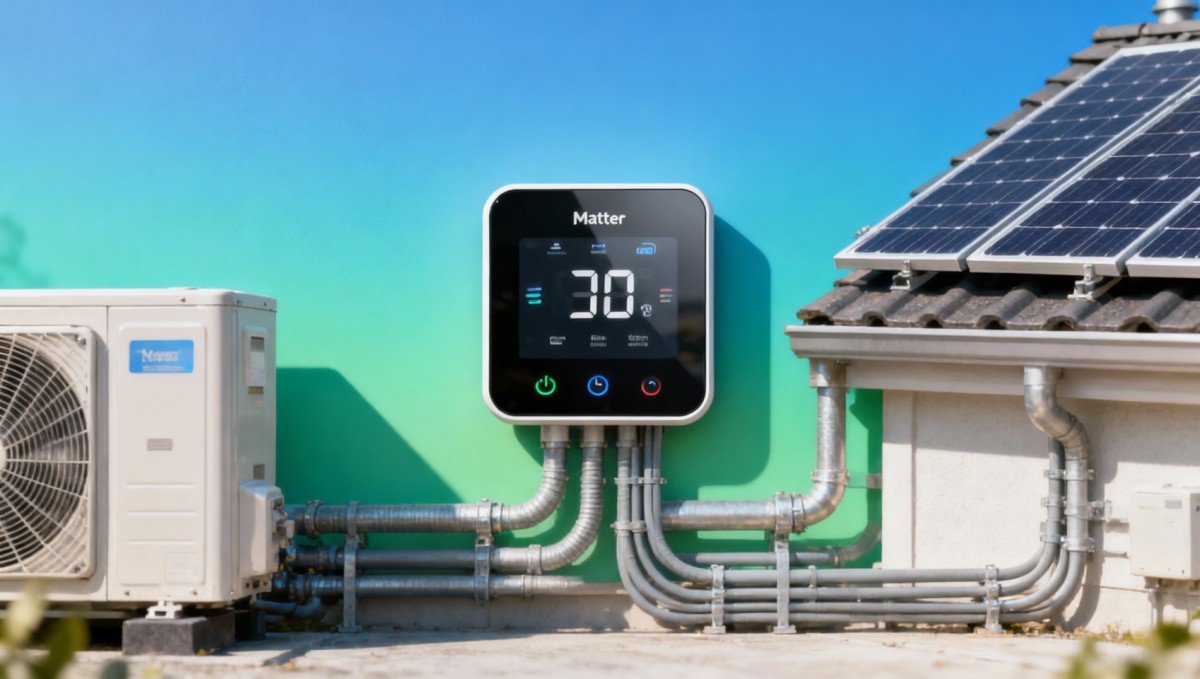
The first priority is not appearance, app screenshots, or even unit price. It is whether the factory can prove stable performance in your target use case. In renewable energy and smart building projects, thermostats increasingly act as control nodes inside a broader ecosystem that may include HVAC systems, heat pumps, solar-linked load management, battery storage logic, and smart home automation platforms.
That means your first factory questions should focus on five areas:
- Protocol compatibility: Does the thermostat support the connectivity stack you need, such as Wi-Fi, Zigbee, BLE, Thread, or Matter?
- Control performance: Can the supplier explain its HVAC PID control algorithm, thermostat temperature hysteresis settings, and response logic for different heating and cooling systems?
- Energy intelligence: Does the device support peak load shifting, demand response logic, and accurate energy monitoring?
- Manufacturing consistency: Can the OEM show test procedures, failure rates, calibration methods, and traceability systems?
- Customization and lifecycle support: Can they handle firmware updates, white-label requirements, certifications, and long-term component supply?
If a supplier cannot answer these clearly, the risk is high. In practice, weak answers here often signal hidden problems in firmware maturity, integration reliability, or product consistency.
Which factory questions reveal real engineering strength instead of marketing claims?
Many OEMs will say their product is “smart,” “energy-saving,” or “works with multiple platforms.” Those claims are too vague to support a sourcing decision. What matters is whether they can provide measurable answers.
Ask questions such as:
- How is HVAC control implemented? Is the thermostat using simple on/off logic, staged control, or a tunable PID algorithm? This affects comfort, energy efficiency, and equipment wear.
- What is the default and adjustable thermostat temperature hysteresis? Poor hysteresis design can cause short cycling, unstable room temperature, and user complaints.
- How does the product perform across different HVAC applications? For example, fan coil units, heat pumps, underfloor heating, VRF systems, or packaged rooftop systems.
- Can the thermostat integrate with Matter or other smart home frameworks without relying on unstable middleware?
- What happens during network loss or cloud disruption? A good OEM should support safe local control and predictable fallback behavior.
- How are temperature sensors calibrated and validated? Sensor drift and inconsistent calibration can undermine the entire product.
- What is the tested standby power consumption? This matters in energy-conscious projects and large-scale deployments.
Strong factories answer with data, test reports, and design logic. Weak factories answer with generic phrases.
Why do HVAC control logic and hysteresis matter so much in renewable energy projects?
In renewable energy environments, thermostat performance directly affects how efficiently a building consumes power. A thermostat is no longer just a wall controller. It can become part of a wider control strategy tied to occupancy, tariff periods, solar generation windows, battery charging states, and grid balancing needs.
This is why HVAC PID control algorithm design matters. A better-tuned controller can reduce overshoot, stabilize room temperature, and improve equipment efficiency. In contrast, poor control logic can lead to frequent compressor cycling, occupant discomfort, and unnecessary power use.
Thermostat temperature hysteresis is equally important. If hysteresis is too narrow, the system may switch too often. If it is too wide, comfort suffers and the building may drift outside the desired temperature range. For enterprise buyers, the right question is not simply “Does your thermostat have hysteresis control?” but “Can hysteresis be configured for different HVAC loads and building profiles, and what field data supports the recommended settings?”
This becomes especially valuable in:
- Commercial buildings with variable occupancy
- Residential developments integrating solar self-consumption strategies
- Heat pump deployments requiring more refined control behavior
- Retrofit projects where HVAC system response is less predictable
How do you assess Matter, smart home integration, and ecosystem readiness?
One of the biggest sourcing mistakes is accepting “Matter-ready” or “smart home compatible” at face value. Integration quality depends on more than protocol labels. A smart thermostat OEM should be able to explain exactly what is supported and under what conditions.
Important questions include:
- Does the thermostat support native Matter, or is support planned through a future firmware release?
- Which device types, attributes, and control functions are already implemented?
- How does the device behave in multi-admin environments?
- What latency has been observed in real control scenarios?
- How are OTA firmware updates managed without breaking installed integrations?
- What interoperability testing has been completed with major ecosystems?
For buyers in renewable energy and climate control, smart home integration is not only a consumer convenience feature. It can enable automation rules for smart home peak load shifting, remote energy optimization, and coordinated operation with other connected devices. That means ecosystem readiness should be judged by actual system behavior, not logo collections on a sales sheet.
What manufacturing and quality questions protect you from costly OEM mistakes?
Even a well-designed thermostat can fail commercially if the factory lacks production discipline. Business evaluators and enterprise decision-makers should pay close attention to quality systems because field failures are expensive, especially once devices are installed across multiple sites or projects.
Ask the OEM:
- What are the incoming quality control standards for sensors, MCUs, relays, displays, and wireless modules?
- How is PCB assembly verified, and what in-line and final test stages are used?
- What is the production yield and recent return rate?
- How are temperature measurement accuracy and relay switching reliability tested?
- Can the supplier provide environmental testing data for humidity, heat, voltage fluctuation, and long-duration operation?
- How is batch traceability managed for warranty and root-cause analysis?
- What is the process for firmware version control across production lots?
These questions help uncover whether the OEM operates as a true manufacturing partner or simply assembles a generic design with limited process control.
For operating teams, consistency matters because installation and support become much easier when products behave predictably across batches. For management, strong factory quality control reduces after-sales cost, reputational risk, and channel friction.
How important are energy monitoring accuracy and peak load shifting features?
As buildings become more energy-aware, a thermostat’s role is expanding. Some buyers now expect the device to contribute to energy visibility, scheduling intelligence, and load management. This is especially relevant in renewable energy applications where timing of consumption can be as important as total consumption.
If the thermostat includes energy-related functions, ask:
- What exactly is being measured—runtime, estimated consumption, or actual metered energy?
- If energy monitoring is included, what is the supported energy monitoring accuracy class, such as class 1.0?
- How often is data sampled, processed, and reported?
- Can the thermostat support smart home peak load shifting based on tariffs, schedules, or external commands?
- Can it interact with broader building management or energy management systems?
This matters because inaccurate or loosely defined energy features can create unrealistic savings claims. A capable OEM should distinguish clearly between approximate analytics and true measurement-grade data. That distinction affects product positioning, compliance, and customer trust.
What commercial and project questions should decision-makers ask before signing?
Technical capability is only part of the OEM decision. The commercial model must also fit your growth plan, service model, and risk tolerance.
Before moving forward, confirm:
- MOQ and scaling: Can the factory support pilot quantities and then scale to mass production without redesign risk?
- Customization scope: What can be customized—industrial design, firmware, app branding, packaging, protocol stack, or backend integration?
- Certification responsibility: Who manages CE, FCC, RoHS, RED, or region-specific compliance?
- Lead times: What are the timelines for EVT, DVT, PVT, and full production?
- Component continuity: What happens if key chips or modules face shortages or end-of-life issues?
- Support model: Will the OEM provide field debugging, firmware maintenance, and failure analysis support?
- IP and exclusivity: Who owns the firmware, tooling, cloud logic, and custom design elements?
For enterprise decision-makers, these answers often determine the true ROI of the partnership. A lower quote can become more expensive if certification delays, firmware limitations, or weak lifecycle support slow down launch and damage customer satisfaction.
A practical shortlist: how to compare smart thermostat OEM factories efficiently
If you are evaluating multiple suppliers, use a simple scorecard instead of relying on presentations alone. Compare each factory across these dimensions:
- Control performance: PID tuning capability, hysteresis control, HVAC compatibility
- Connectivity: Matter readiness, protocol support, local reliability
- Energy features: peak load shifting, energy monitoring, data clarity
- Manufacturing quality: test coverage, traceability, return rate
- Customization: firmware, branding, regional adaptation
- Compliance: certifications and regulatory readiness
- Lifecycle support: OTA strategy, debug support, supply continuity
- Commercial fit: MOQ, pricing structure, delivery reliability
This kind of structured comparison is more useful than asking which factory is “best.” The right smart thermostat OEM is the one that fits your application, performance target, and business model with the lowest execution risk.
Conclusion: the best OEM questions reduce technical risk before it becomes business risk
Choosing a smart thermostat OEM manufacturer is really an exercise in risk reduction. Buyers are not just sourcing a device—they are selecting a long-term platform for HVAC control, smart home integration, energy management, and customer experience.
The most valuable factory questions are the ones that uncover measurable engineering capability: how the HVAC PID control algorithm is implemented, how thermostat temperature hysteresis is tuned, how Matter integration behaves in real deployments, and whether energy monitoring accuracy class 1.0 or smart home peak load shifting features are genuinely supported.
If a factory can provide hard answers, test evidence, and a credible production process, it is far more likely to deliver lasting value. If it cannot, the risk will usually appear later through unstable performance, support burden, and hidden project cost. In this market, asking better questions is not optional—it is the clearest path to selecting an OEM that can support both renewable energy goals and commercial success.
Protocol_Architect
Dr. Thorne is a leading architect in IoT mesh protocols with 15+ years at NexusHome Intelligence. His research specializes in high-availability systems and sub-GHz propagation modeling.
Related Recommendations
- Kenji Sato (Infrastructure Arch)How HVAC PID Control Improves Comfort
- Kenji Sato (Infrastructure Arch)Thermostat Temperature Hysteresis: Best Settings
- Kenji Sato (Infrastructure Arch)How to Find a Reliable HVAC Relay Supplier
- Kenji Sato (Infrastructure Arch)Smart Thermostat OEM: Key Factory Questions
- Kenji Sato (Infrastructure Arch)Hangzhou Refrigeration & Cold Chain Expo 2026 Sets Green & Smart Standards for Global Buyers
- Kenji Sato (Infrastructure Arch)Cloud Cellar Launches Fine Wine Division, Boosts Smart Supply Chain Demand
- Kenji Sato (Infrastructure Arch)JD Fresh Launches '1 Store + N Warehouses' Model, Boosting Smart Cold Chain Demand
- Kenji Sato (Infrastructure Arch)Smart Home Think Tank: Are We Overestimating Matter’s Impact on Legacy HVAC Integration?
- Kenji Sato (Infrastructure Arch)Climate Control Hardware Benchmarking: Why Zigbee Smart Plugs Fail Under HVAC Surge Loads
- Kenji Sato (Infrastructure Arch)Contact NHI analysts: When is the right time to request a custom benchmark report?
Analyst