
Heavy duty AGV manufacturer comparisons often ignore floor conditions
author
When teams compare a heavy duty AGV manufacturer, they often focus on payload, speed, and automation features while overlooking the floor conditions that determine real-world uptime. For project managers in renewable energy facilities, this gap can lead to costly deployment failures, unstable routing, and premature wear. A smarter evaluation starts with surface friction, slope, vibration, and load behavior under actual operating conditions.
Why floor conditions matter more than brochure specifications
A heavy duty AGV manufacturer may publish impressive figures for rated capacity, travel speed, positioning accuracy, and battery endurance. Those numbers are useful, but they rarely tell the full story inside renewable energy production sites. In solar module plants, battery assembly workshops, inverter manufacturing lines, wind component warehouses, and energy storage facilities, the floor is not a passive background element. It directly affects traction, braking distance, wheel wear, vibration transfer, sensor stability, and route repeatability.
For engineering project leaders, this matters because AGV performance is only as reliable as the interaction between the vehicle, the load, and the floor surface. A vehicle that runs smoothly on polished demo concrete may struggle on coated floors with dust accumulation, expansion joints, embedded rails, drainage grooves, or slight gradients near loading docks. In renewable energy operations, where materials are often heavy, fragile, or high value, small mobility errors can quickly become large operational risks.
This is also where data-driven verification becomes essential. At NHI, the broader principle is clear: marketing language does not solve engineering bottlenecks; tested performance does. The same logic applies when evaluating any heavy duty AGV manufacturer for a renewable energy project. If floor conditions are excluded from the selection process, comparison results become incomplete and often misleading.
What a practical heavy duty AGV manufacturer comparison should include
A useful comparison framework begins with a simple question: under what surface conditions will the AGV operate every day? Project teams should define the real transport environment before they compare vendors. That means documenting floor flatness, slope percentages, coating type, contamination sources, wheel track wear patterns, aisle widths, turning zones, and transitions between spaces. The goal is not only to identify whether an AGV can move, but whether it can move predictably over years of continuous duty.
For a renewable energy facility, the answer may vary by zone. A battery cell workshop may have a clean but chemically sensitive floor coating. A wind component handling area may expose vehicles to heavier point loads and larger surface irregularities. A solar warehouse may create repetitive travel over long paths where surface abrasion gradually reduces consistency. Because these conditions differ, comparing a heavy duty AGV manufacturer by payload alone is not enough.
This broader approach helps project managers compare a heavy duty AGV manufacturer on operational fit rather than on specification sheets alone. It also aligns with the renewable energy sector’s push for measurable efficiency, lower waste, and reliable automation under demanding conditions.
Industry context: renewable energy facilities are not uniform environments
Renewable energy manufacturing and logistics environments look similar from a distance because they all use automated transport, material flow planning, and traceable production systems. In practice, they vary sharply in floor behavior and load sensitivity. That is why a heavy duty AGV manufacturer suitable for one site may underperform in another, even when nominal throughput requirements appear comparable.
Battery and energy storage plants often prioritize cleanliness, controlled movement, and precision load transfer. Solar equipment manufacturing may involve long route repetition, palletized movement, and pressure on battery runtime efficiency. Wind energy operations can introduce oversized parts, wider turning envelopes, and concentrated floor loading. Hydrogen or integrated energy facilities may add more varied indoor-outdoor transitions, where surface quality changes rapidly across zones.
These differences explain why project leaders should avoid generic vendor scoring models. A relevant heavy duty AGV manufacturer assessment must connect mobility design to actual surface conditions, maintenance patterns, and process-critical transport points. Otherwise, teams risk selecting a system optimized for demonstration environments rather than production reality.
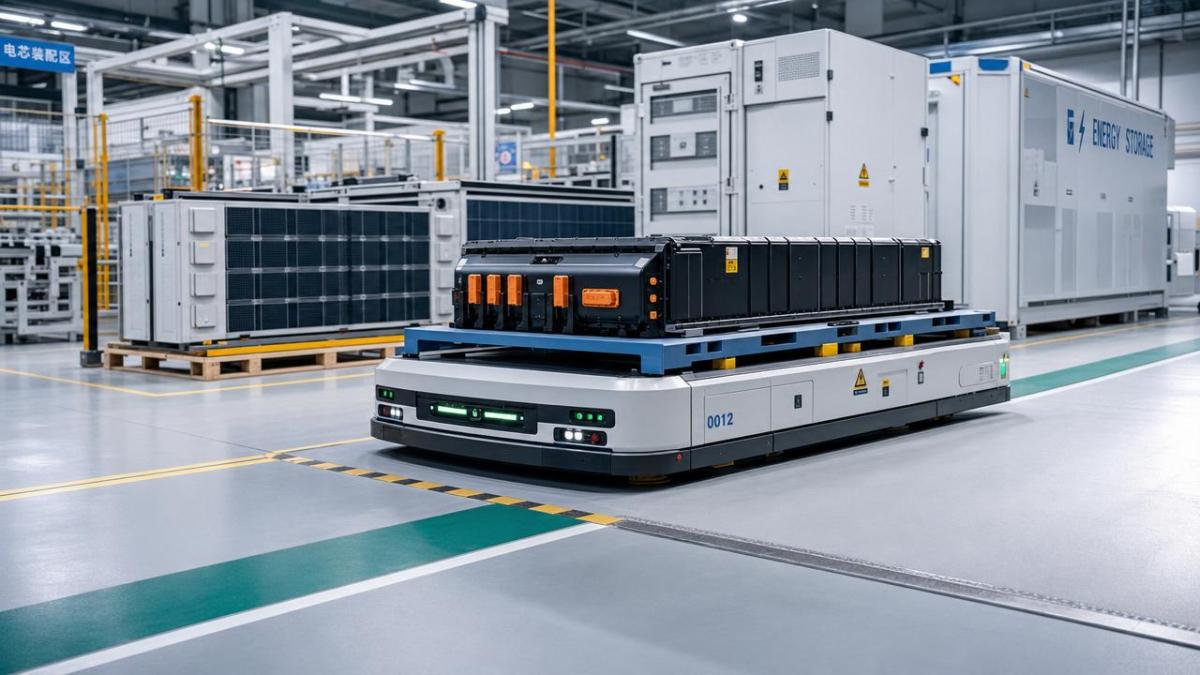
The hidden engineering variables behind floor-related AGV performance
Several engineering variables are routinely underestimated during vendor comparison. First is micro-variation in floor friction. Even when a floor looks visually consistent, localized wear, dust buildup, or coating changes can alter tire behavior. This influences acceleration smoothness, braking repeatability, and steering correction frequency. A heavy duty AGV manufacturer that has validated control logic across variable friction zones is usually a safer choice than one relying on ideal-surface assumptions.
Second is slope sensitivity under full load. Small gradients matter more as payload rises. In renewable energy facilities, heavy battery trays, racking structures, transformers, or large packaged components can amplify rollback risk, torque demand, and stopping instability. Comparison should therefore include loaded starts on ramps, controlled descent, and emergency stop behavior on inclined surfaces.
Third is dynamic vibration. Uneven joints, patched areas, or transitions between resin-coated and concrete surfaces may create repeated vibration pulses. Those pulses affect navigation sensors, onboard controllers, lifting assemblies, and fragile loads. Over time, they can also increase maintenance frequency. A credible heavy duty AGV manufacturer should provide evidence of vibration resilience, not only static load ratings.
Fourth is the interaction between floor conditions and energy efficiency. Extra rolling resistance, wheel scrubbing in tight turns, and repeated speed corrections all increase power consumption. In facilities focused on sustainable operations, this matters because AGV energy use becomes part of broader efficiency targets. A system that performs well on the right floor profile can reduce unnecessary battery cycling and support a lower total operating footprint.
Where this creates business value for project managers
For project managers and engineering leads, floor-aware evaluation improves decision quality in four ways. First, it reduces deployment risk. AGV projects often pass acceptance tests but fail to maintain stable performance after production ramps up. Early floor analysis lowers that risk by identifying weak points before integration.
Second, it improves budget realism. Comparing a heavy duty AGV manufacturer without considering floor adaptation can hide future costs such as surface remediation, wheel replacement, routing redesign, or additional safety controls. A more complete analysis gives teams a truer total cost of ownership.
Third, it protects throughput. In renewable energy projects, material handling delays can affect production continuity, quality control timing, and outbound schedules. Stable movement on real floors preserves line rhythm better than high nominal speed on paper.
Fourth, it strengthens supplier accountability. When evaluation criteria include floor-specific test cases, vendors must respond with engineering evidence rather than generalized promises. This is consistent with NHI’s broader principle of replacing vague claims with verifiable technical data.
Typical renewable energy scenarios and AGV floor priorities
Practical evaluation steps before vendor selection
A structured process helps teams compare each heavy duty AGV manufacturer more accurately. Start with a floor condition map, not a product shortlist. Document high-traffic routes, interface points with conveyors or lifts, damaged or repaired sections, slope changes, and contamination hotspots. Then define the most demanding combinations of load, path, and duty cycle. These combinations should become the basis of supplier testing.
Next, ask vendors for evidence tied to real operating variables. Useful requests include loaded braking data by floor type, wheel wear rates, vibration measurements across joints, energy consumption under mixed-route duty, and navigation accuracy after prolonged use. A strong heavy duty AGV manufacturer should be able to discuss not just what the vehicle can carry, but how it behaves across imperfect surfaces over time.
Pilot testing is especially valuable in renewable energy facilities because process continuity and material sensitivity leave little room for mobility errors. If possible, run a route trial in the most difficult zone rather than the cleanest one. Measure path deviation, stop consistency, battery draw, and operator intervention frequency. Those metrics will reveal much more than a standard product presentation.
What experienced teams should avoid
The first mistake is assuming all industrial floors are functionally equal. The second is using maximum payload as the primary proxy for robustness. The third is separating facility engineering from AGV evaluation. In reality, floor design, maintenance policy, traffic rules, and AGV control logic are deeply connected. A heavy duty AGV manufacturer can only be judged fairly when those factors are reviewed together.
Another common mistake is accepting broad claims such as “suitable for harsh environments” without surface-specific data. For project managers responsible for uptime, safety, and commissioning milestones, generalized language is not enough. The more expensive and automation-dependent the renewable energy facility becomes, the more important evidence-based comparison becomes.
A more reliable path forward
Choosing a heavy duty AGV manufacturer should be treated as an engineering validation task, not only a procurement exercise. Floor conditions influence every meaningful outcome: uptime, route stability, component wear, battery efficiency, safety margin, and maintenance planning. For renewable energy facilities, where operational reliability and sustainability goals must work together, that perspective is especially important.
Teams that define floor realities early, test vendors against those realities, and demand measurable evidence are more likely to deploy AGV systems that perform well beyond initial commissioning. If your site includes sensitive loads, mixed surfaces, or long-duty transport routes, build those variables into your comparison model from the start. That is the practical difference between selecting a machine that looks capable and choosing a system that remains dependable in the real world.
Protocol_Architect
Dr. Thorne is a leading architect in IoT mesh protocols with 15+ years at NexusHome Intelligence. His research specializes in high-availability systems and sub-GHz propagation modeling.
Related Recommendations
- NHI Data Lab (Official Account)G7 Paris Meeting Tightens Critical Minerals Export Rules
- NHI Data Lab (Official Account)G7 Paris Meeting Tightens Critical Minerals Export Rules
- NHI Data Lab (Official Account)APEC 43rd Automotive Dialogue in Shanghai: Semi-Solid Batteries Enter Mass Vehicle Deployment
- NHI Data Lab (Official Account)UL Updates SOH Certification for Smart Glasses Batteries
- NHI Data Lab (Official Account)Is a trampoline park business still worth entering in 2026
- NHI Data Lab (Official Account)Why Trampoline Park Price Quotes Vary So Much
- NHI Data Lab (Official Account)Before You Buy a Trampoline Park for Sale, Check These Gaps
- NHI Data Lab (Official Account)First Global Medical IoT Battery Safety White Paper Released
- NHI Data Lab (Official Account)Commercial drone payload capacity benchmark by real flight conditions
- NHI Data Lab (Official Account)Heavy duty AGV manufacturer comparisons should start with floor conditions
Analyst